

Multi Conductor Cables are engineered to accommodate multiple individually insulated conductors within one integrated cable structure, making them suitable for applications where several electrical circuits need to be routed through a compact and organized wiring solution. By consolidating multiple conductors into a single cable, this cable type can help simplify equipment wiring, reduce cable routing complexity and improve overall installation efficiency.
Multi Conductor Cables can be used for power distribution, control signals, data-related connections and auxiliary electrical circuits, depending on the selected cable construction and application requirements. Their multi-core configuration makes them particularly useful for machinery, electrical equipment, control cabinets, automation systems and other applications where space management and orderly wiring are important.
XUNPU develops and supplies cable solutions for different equipment and connection requirements, with available configurations determined by conductor count, conductor construction, insulation, jacket materials, shielding requirements and other application-specific specifications. Customers can select a suitable cable configuration according to operating conditions, electrical requirements, installation environment and equipment design.
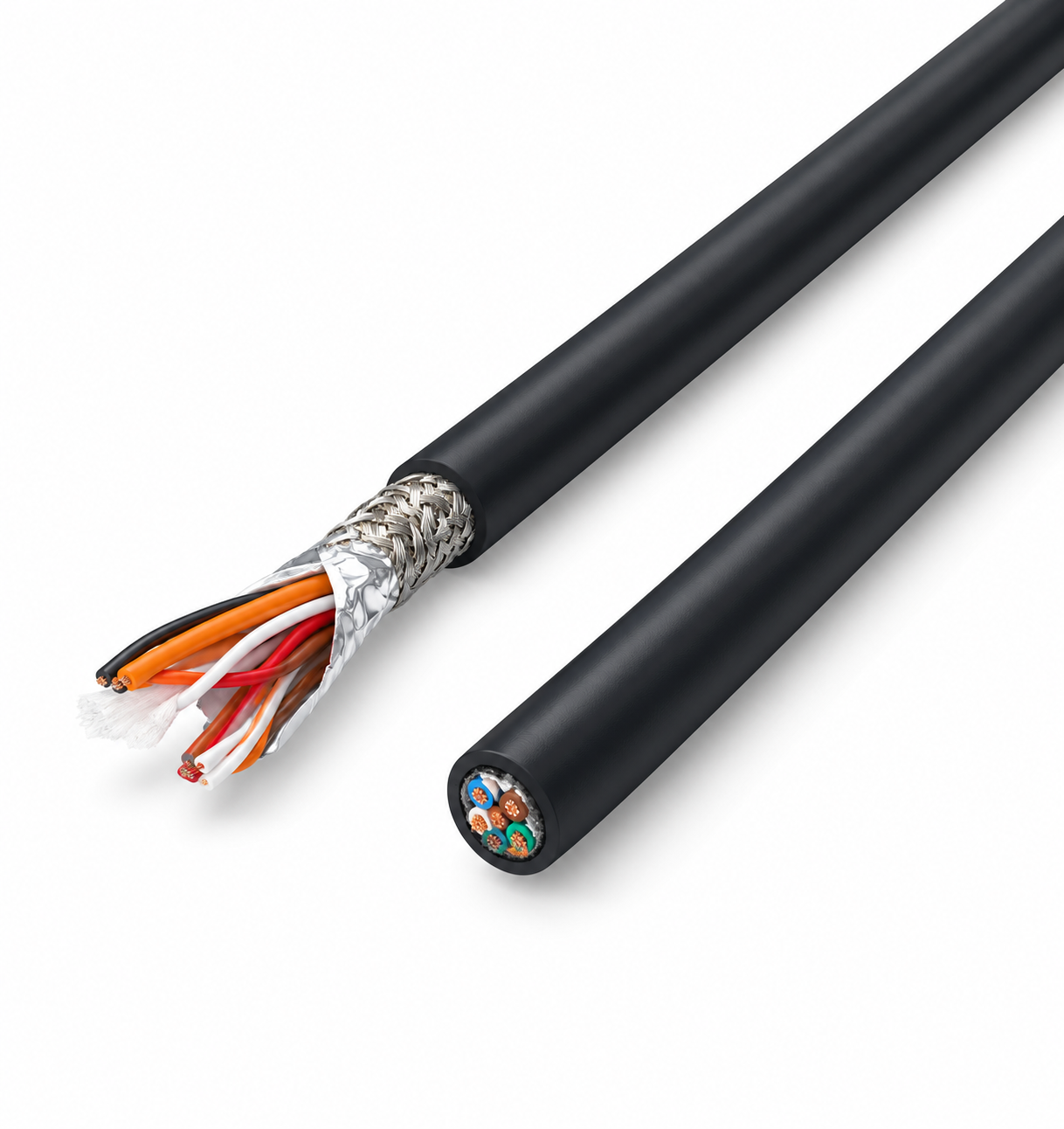
Conductor configuration: Multiple individually insulated conductors integrated into one cable construction.
Conductor material: Configuration can be selected according to electrical performance, flexibility and application requirements.
Core count: Available in different conductor counts to accommodate various circuit and wiring configurations.
Conductor construction: Solid or stranded constructions may be selected according to the required flexibility and installation conditions.
Insulation: Insulation material and construction can be specified according to electrical, mechanical and environmental requirements.
Outer jacket: Cable jacket options can be selected according to the intended installation environment and required protection.
Shielding: Shielded configurations can be considered for applications requiring additional protection against electromagnetic interference.
Electrical characteristics: Voltage, current capacity and other electrical parameters should be specified according to the selected cable construction and application requirements.
Operating environment: Cable selection should consider temperature, mechanical movement, moisture, chemical exposure and other environmental factors.
Customization: Conductor count, cable dimensions, construction and other specifications can be configured according to project requirements.
Multi-circuit integration allows several conductors to be combined within one cable, helping create a cleaner and more organized wiring arrangement.
The compact cable construction can simplify routing in equipment where installation space is limited or where multiple individual wires would create unnecessary wiring complexity.
Different conductor configurations provide flexibility for equipment designers to match the cable to specific power, control and signal transmission requirements.
Flexible constructions can be selected for equipment requiring repeated movement, cable routing through confined spaces or frequent installation adjustments.
Shielded options can provide additional protection for applications where electromagnetic interference may affect sensitive electrical signals.
The integrated structure helps reduce the number of separate cables that need to be routed and managed during equipment assembly and maintenance.
Custom cable configurations allow the product to be adapted to different electrical architectures, equipment layouts and installation conditions.
Multi Conductor Cables provide a consolidated pathway for multiple electrical circuits within equipment and systems. Depending on the selected configuration, individual conductors can be assigned to power supply, control signals, sensor connections, communication-related circuits or auxiliary functions.
The cable can help connect components located at different positions within machinery while keeping multiple circuits organized within a common cable route. This makes it useful for equipment wiring where installation efficiency, cable management and system organization are important considerations.
For automation equipment and control systems, multi-core construction can support connections between controllers, sensors, actuators, switches and other electrical components. For electronic equipment, the cable can also be configured for compact internal or external wiring according to the required electrical characteristics.
Industrial automation equipment: Multi Conductor Cables can be used to organize connections between controllers, sensors, actuators and other electrical components in automated machinery.
Machinery and equipment wiring: The cable can route multiple electrical circuits between motors, control components, switches and auxiliary devices while keeping the installation organized.
Control cabinets: Multi-core cable construction can simplify internal wiring where several control or auxiliary circuits need to be connected within a limited cabinet space.
Electronic equipment: Suitable cable configurations can provide organized multi-circuit connections for electronic devices and equipment assemblies.
Electrical control systems: Multiple conductors within a common cable can be assigned to different control and auxiliary circuits according to system requirements.
Sensor and instrumentation systems: Appropriately configured multi-conductor cables can be used to route connections between sensors, instruments and control equipment.
Industrial production lines: The cable can support organized electrical connections between different equipment modules and control components across production systems.
Custom equipment projects: Cable construction can be configured around specific conductor counts, installation requirements and equipment layouts for OEM applications.
Q1: What are Multi Conductor Cables?
Multi Conductor Cables contain multiple individually insulated conductors within a common cable structure. They are designed to carry multiple electrical circuits through one organized cable assembly.
Q2: What are Multi Conductor Cables used for?
They are commonly used for equipment wiring, control systems, industrial automation, machinery, electrical cabinets and applications requiring multiple power, control or signal connections.
Q3: Can the number of conductors be customized?
Yes. The conductor count can be selected according to the number of circuits, equipment architecture and electrical requirements of the application.
Q4: Are flexible versions available?
Flexible constructions can be specified for applications involving movement, tighter cable routing or equipment assemblies where installation flexibility is required.
Q5: Can Multi Conductor Cables be shielded?
Shielded constructions can be considered for applications where electromagnetic interference protection is required. The appropriate shielding structure depends on the equipment and operating environment.
Q6: Can these cables be used in industrial automation?
Yes. Appropriate Multi Conductor Cable configurations can be used for connections between controllers, sensors, actuators and other components in industrial automation equipment.
Q7: What factors should be considered when selecting a Multi Conductor Cable?
Important factors include conductor count, conductor construction, conductor size, insulation, jacket material, voltage requirements, current capacity, flexibility, shielding and installation environment.
Q8: Does XUNPU provide customized cable solutions?
XUNPU can develop cable configurations according to project requirements, with customization depending on the required conductor arrangement, cable construction, electrical specifications and application conditions.


Copyright © 2026 All rights reserved Sitemap
Technical Support:hzw
This website uses cookies to ensure you get the best experience on our website.



 WhatsApp
 Phone
Phone