

The Mini M7 Molded Cable is a compact cable assembly designed for equipment that requires a small M7 connection interface with an integrated cable structure. By combining the connector and cable into a prepared molded assembly, the product provides a practical wiring component for compact electronic devices, sensors, instrumentation, automation modules and machine subassemblies.
Its Mini M7 format is intended for applications where connection space needs to be considered as part of the overall equipment design. The relatively compact interface can be incorporated into devices with closely positioned components, helping equipment designers develop connection layouts without relying on larger connector formats where they are not required.
The molded construction makes the product different from a loose connector and separate cable combination. The connection section and cable are supplied as an integrated assembly, allowing manufacturers to handle the product as a prepared wiring component during equipment production. This can simplify assembly planning and provide a consistent connection format across repeat-production equipment.
Mini M7 Molded Cable can be incorporated into signal, control, power or other electrical connection systems depending on the selected cable construction and the requirements of the connected equipment. The actual electrical performance should be determined from the final conductor specification, cable design and application conditions.
For OEM projects, XUNPU can develop cable assemblies around the customer's equipment structure and connection requirements. Cable length, conductor arrangement, cable-end termination and related assembly details can be discussed according to the product drawing, wiring architecture and intended installation method.
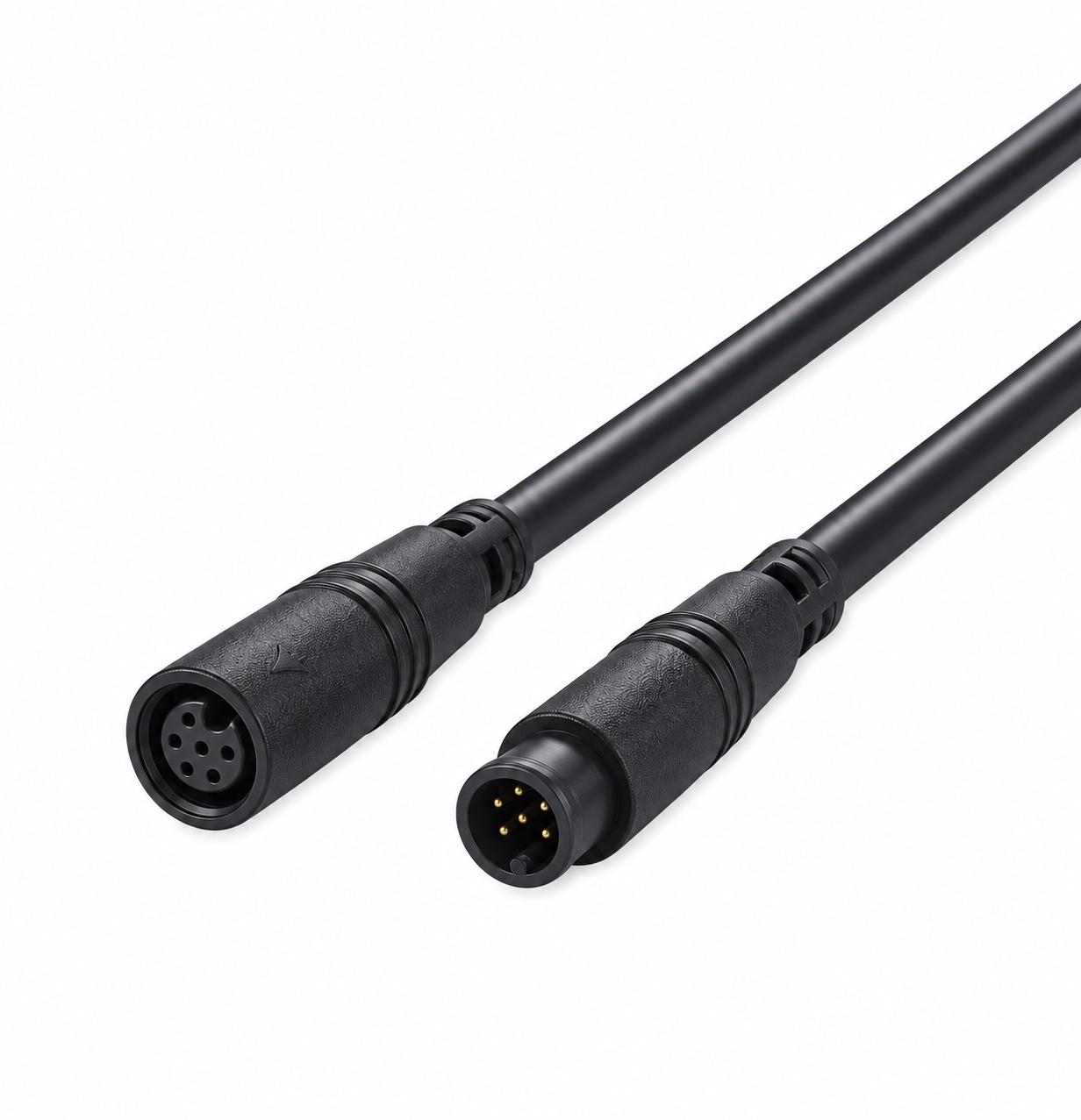
Product Type: Mini M7 Molded Cable.
Connector Format: Mini M7 connection interface integrated with the cable assembly.
Cable Construction: Molded cable assembly with the connector and cable combined into a finished connection component.
Cable Length: Can be specified according to the required distance between connection points and the physical installation layout.
Conductor Configuration: Wire quantity, conductor structure and internal circuit arrangement can be selected according to the electrical requirements of the connected equipment.
Cable End: The free cable end can be configured according to the customer's required terminal, connector, wiring or equipment-side connection method.
Assembly Structure: Integrated connector and cable construction designed to be installed as a prepared cable assembly.
Routing Arrangement: Cable routing and overall assembly layout can be discussed according to the available space and connection direction of the target equipment.
Customization: Cable length, conductor configuration, cable-end treatment and related assembly requirements can be adapted for OEM projects.
Electrical Characteristics: Rated voltage, current capacity, conductor size and other electrical parameters should be confirmed according to the final cable construction and application requirements.
Mating Compatibility: The mating connector and complete interface specifications should be confirmed according to the exact M7 connection configuration used by the customer's equipment.
The Mini M7 Molded Cable is built around a compact M7 connection format, making it suitable for equipment designs where the available connection area is limited. Its smaller interface can be incorporated into compact devices, sensor assemblies and electronic modules without introducing an unnecessarily large connection structure.
The integrated molded construction is one of the main characteristics of the assembly. Instead of requiring the connector and cable to be prepared separately, the product is supplied as a combined cable component, which can make component handling and equipment assembly more straightforward.
The finished cable format is suitable for equipment manufacturers that prefer a defined connection component in their production process. A consistent cable configuration can be incorporated into the equipment design and used across multiple units where the same connection architecture is required.
The compact form factor can also support more flexible equipment layout planning. When sensors, control modules and mechanical components are installed close to one another, a smaller connector interface can provide additional freedom when arranging the available connection points and cable paths.
Another feature is the ability to configure the cable around the application rather than treating every project as a fixed standard assembly. XUNPU can work with customers on cable dimensions, conductor arrangements and termination requirements so that the finished component corresponds with the intended equipment design.
The assembly format is also suitable for applications where cable preparation needs to be controlled before the product reaches the final equipment production stage. This can help manufacturers establish a repeatable wiring process and reduce the number of individual connection components handled during assembly.
The Mini M7 Molded Cable serves as an electrical connection between a compatible M7 interface and another point within an equipment wiring system. Its specific function may include signal transmission, control wiring, power connection or other electrical interconnection depending on the selected conductor configuration.
The integrated cable extends the connection away from the M7 interface and allows the device to be connected to a controller, terminal, wiring harness, electronic module or other part of the equipment. This makes the assembly suitable for both device-level and machine-level wiring structures.
The molded structure provides a ready-to-install cable component. Equipment manufacturers can incorporate the prepared assembly into their production workflow rather than completing the connector and cable connection as separate operations during final equipment assembly.
The cable can also help establish a defined connection path between components. By selecting an appropriate cable length, manufacturers can match the assembly to the physical distance between connection points and develop a more organized internal or external wiring arrangement.
For OEM products, the cable assembly can become part of a repeatable equipment connection design. Once the required connector configuration, cable dimensions and conductor arrangement are established, the same assembly structure can be incorporated into compatible production models.
Compact Sensor Equipment: Miniature sensors and sensing modules can incorporate the Mini M7 cable when their connection architecture requires a compatible M7 interface. The compact connector format can be considered for installations where surrounding components are positioned close to the sensing device.
Industrial Instrumentation: Measurement and monitoring instruments can use the molded cable as part of their connection system. The integrated assembly provides a prepared interface between the instrument and its external or internal wiring structure.
Automation Modules: Compact automation components can incorporate the M7 cable for equipment-level connections where the corresponding interface is specified. It can be integrated into control modules, sensing units and machine subassemblies according to the system wiring design.
Electronic Devices: Electronic equipment with a compatible M7 connection can use the cable assembly to extend a device connection toward a control board, terminal or other wiring point. The cable configuration can be selected according to the electrical architecture of the product.
Machine Components: Machine builders can use Mini M7 molded cables between individual components and the main equipment wiring system. Customized cable lengths can be considered when the distance between components differs from one machine design to another.
Compact Control Systems: Controllers and compact electrical modules can integrate the cable when an M7 connection is compatible with the equipment architecture. The molded assembly can be incorporated into the system wiring without requiring a separate connector-to-cable preparation step.
OEM Equipment Manufacturing: OEM manufacturers can specify the Mini M7 Molded Cable during product development and integrate the finished assembly into repeat-production equipment. Cable dimensions and termination requirements can be aligned with the customer's production drawings and wiring process.
Space-Constrained Electronic Assemblies: Equipment with densely arranged components can consider the Mini M7 connection format when a compact interface is needed. The assembly can be positioned according to the available mechanical space and intended cable route.
1. What is a Mini M7 Molded Cable?
A Mini M7 Molded Cable is an integrated cable assembly that combines an M7 connection interface with a molded cable. It is designed for compatible electronic devices, sensors, automation equipment, instruments and machine components.
2. What applications can use a Mini M7 molded cable?
It can be considered for compatible sensors, instrumentation, automation modules, electronic devices, compact control systems and machine subassemblies where an M7 connection interface is required.
3. Is the Mini M7 Molded Cable supplied as a complete assembly?
Yes. The connector and cable are integrated into a molded assembly, allowing the product to be handled as a prepared cable component during equipment installation and manufacturing.
4. Can XUNPU customize the cable length?
Yes. The cable length can be specified according to the distance between connection points and the physical layout of the target equipment.
5. Can the cable wiring configuration be customized?
Yes. Conductor quantity, wiring arrangement and cable-end termination can be discussed according to the electrical requirements and connection architecture of the customer's equipment.
6. Is the Mini M7 cable suitable for sensors?
It can be used in compatible sensor applications where the sensor or related equipment uses the corresponding M7 interface and the cable's electrical specifications match the application requirements.
7. Can the cable be integrated into industrial automation equipment?
Yes. Compatible automation modules, sensing devices and machine components can incorporate the cable into their wiring architecture when the M7 interface and electrical specifications are suitable.
8. What should be confirmed before ordering?
The connector configuration, mating interface, cable length, conductor requirements, cable-end termination, electrical parameters and installation environment should be confirmed before production.
9. Can XUNPU manufacture Mini M7 molded cables for OEM projects?
Yes. XUNPU can support OEM cable assembly requirements and discuss customized specifications based on product drawings, wiring diagrams, connection requirements and production quantities.


Copyright © 2026 All rights reserved Sitemap
Technical Support:hzw
This website uses cookies to ensure you get the best experience on our website.



 WhatsApp
 Phone
Phone